
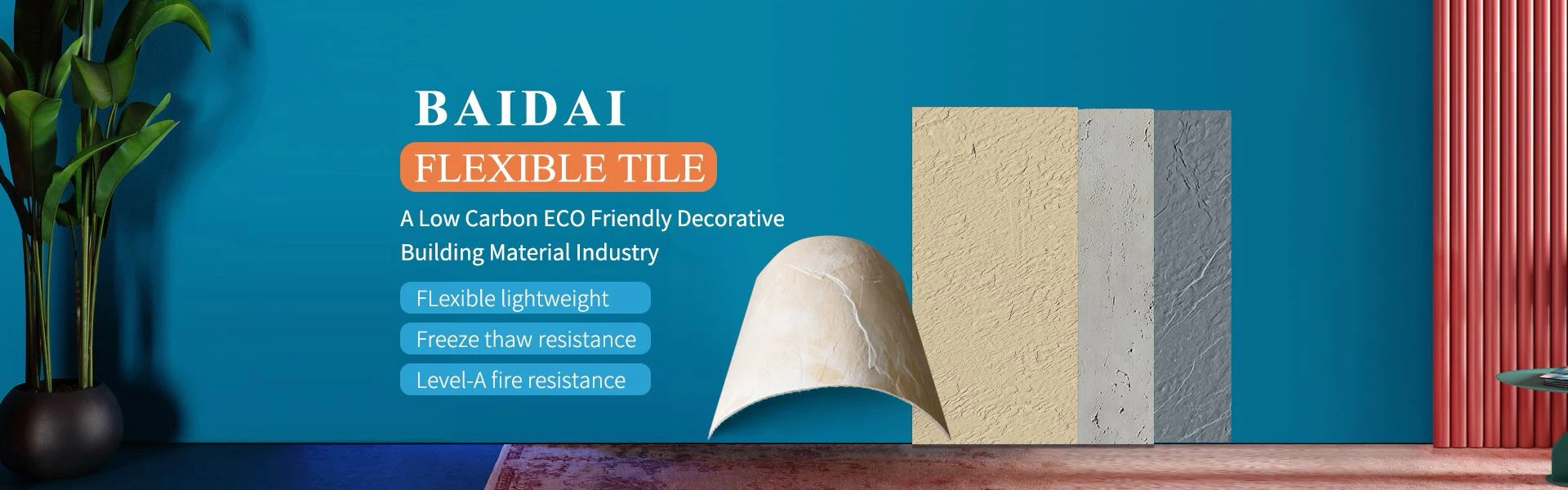
Flexible facing bricks are widely used in building interior and exterior wall decoration due to their advantages of light, thin and flexible texture, colorful texture, safety and fire resistance and durability. So is there anything to pay attention to when laying flexible facing tiles? Can it be directly pasted on rough walls?
The basic treatment of flexible facing bricks before paving is actually very important. The basics must be cleaned to ensure that the level is ±4mm. All kinds of dirt, plastering, chalking, cracking, hollowing, etc. must be treated. Good, to meet the requirements of intermediate plastering. When the wall is wet, a layer of interface agent must be applied before the construction can be carried out to ensure that the wall will not be effluent in the later stage.
Flexible facing tiles, basic treatment, paste
Flexible facing bricks also have natural stone patterns, crocodile skin, cowhide, elephant skin and other skin patterns, sandalwood, pine and other wood patterns, cultural bricks, cloth patterns, linen and other diverse products. The degree of simulation is very high, almost comparable to natural Comparable! Flexible facing bricks have the advantages of mild foot-feeling, wear-resistance, non-slip, and moisture-proof. They are outstanding in both interior wall and floor decoration and exterior wall decoration.